1. The Monitoring Gap Is Larger than people think.
Climate change emissions around the globe are tracked through a myriad of ground stations, occasional spacecraft campaigns, as well satellites operating hundreds of kilometres in the air above the surface. Each has its limitations. Ground stations are not as extensive and geographically biased toward rich countries. Aircraft missions are costly with a short duration and are limited in their coverage. Satellites give global coverage but struggle with the resolution needed to determine specific emission sources like leaky pipelines, a landfill that releases methane, or an industrial facility which isn't reporting its output. The result is an environmental monitoring system that has severe errors at exactly the size where accountability and intervention is crucial. Stratospheric platforms are increasingly being looked at as the missing middle layer.
2. An Altitude Advantage in Monitoring Satellites can't duplicate
There's an argument in geometry for why 20 kilometres beats 500 kilometres in terms of monitoring emissions. A sensor operating from stratospheric height can be able observe a footprint of up to a hundred kilometres in proximity enough to detect emission sources at a high resolution - individual facilities highway corridors, individual facilities, agricultural zones, and so on. Satellites that are looking at the same region from the low Earth orbits cover it much faster however, they are less precise and revisit times. This means a methane cloud that appears and is dispersed in just a few hours will not ever be observed. A platform that is positioned above a target area for days or weeks at a time, transforms intermittent snapshots into something closer to continuous surveillance.
3. Methane Is the Most Important Target and for good reason
Carbon dioxide garners the most people's attention, but methane is the greenhouse gas that improving monitoring in the near future could make the biggest practical difference. Methane is much more potent than CO2 when measured over a period of 20 years and a large proportion in methane-related emissions from humans comes from single sources -- infrastructures for oil and gaz as well as waste facilities and agricultural activities -- which are both detectable and often fixable after they have been identified. Methane monitoring in real-time via a permanent stratospheric monitoring platform means that operators, regulators, as well as governments can find leaks even before they occur instead of finding them months later through annual inventory reconciliations, which typically rely on estimates instead of measurements.
4. The Airship Design of Sceye is Fit for the Monitoring Mission
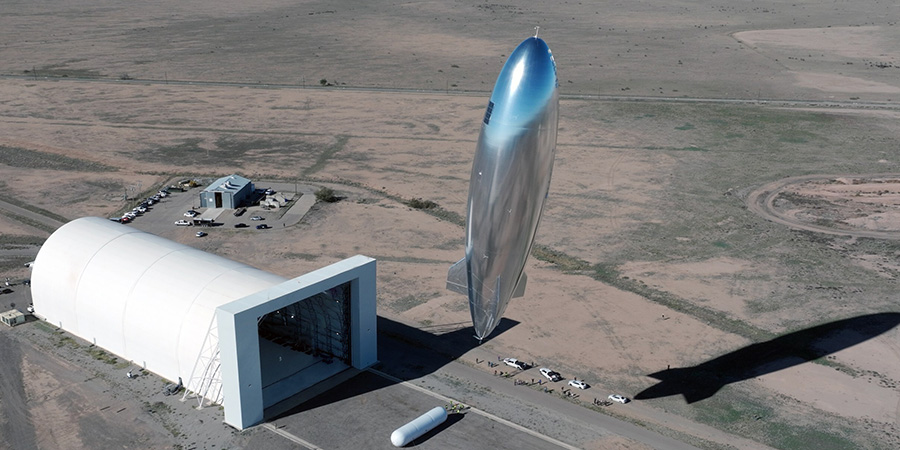
What makes an excellent telecommunications device and a reliable environmental monitoring system overlap more than you think. Both require long endurance as well as stable positioning and an adequate payload capacity. Sceye's lighter than air airship model is able to meet all three requirements. Because buoyancy helps with the fundamental task of staying aloft so the platform's power consumption doesn't go to generating lift as it is utilized to power propulsion, station maintenance and powering the sensors that fit for the mission. For monitoring greenhouse gas emissions, specifically it's necessary to carry the spectrometer, imaging system, and data processing hardware without the weight limitations for fixed-wing HAPS models.
5. Station Keeping is a Non-Negotiable Activity for Important Environmental Data
A platform that varies in its monitoring is a monitor that generates unintelligible data. Knowing exactly where the sensor was when it recorded a reading is crucial to assign this reading to the source. Sceye's emphasis on true station keeping - holding one's position in relation to a targeted area using active propulsion -- isn't merely an indicator of performance on a technical level. It's part of what makes the data scientifically supported. Stratospheric earth observation only becomes genuinely useful for regulatory or legal needs when the locational record is solid enough to stand up to scrutiny. Drifting balloon platforms no matter how efficient their sensors are, they can't give that.
6. The same platform could monitor Oil Pollution and Wildfire Risks simultaneously
One of many compelling benefits of the multi-payload design is the way in which different environmental monitoring missions are able to complement one another on similar vehicles. An airship operating over coastlines or offshore areas can carry sensors designed for monitoring oil pollution as well as monitoring methane and CO2. Over land, the exact platform architecture allows for wildfire detection technology, allowing for the identification of heat signatures, smoke plumes and vegetation stress indicators that indicate ignition triggers. Sceye's design approach to mission development does not consider these as distinct programmes requiring separate aircraft rather as parallel use cases for infrastructure that's currently in place and operating.
7. Detecting Climate Disasters with real-time changes the Response Equation
There's a huge difference between being aware that a wildfire started just six hours ago and being aware that it began just twenty minutes in the past. Similar is true for industrial accidents that release toxic gases, flooding events threatening infrastructure, or sudden methane releases from permafrost. Being able to spot climate disasters in actual the time of a persistent stratospheric network gives emergency officials authorities, government agencies, as well as industrial companies a chance to act that does not happen when monitoring is based on satellite revisit cycles or ground-based reports. The significance of this window grows when you consider that the first stages of environmental disasters are an area where intervention is the most efficient.
8. The Energy Architecture Makes Long Endurance Monitoring Viable
Environmental monitoring missions only offer their true value if a station is left on for long enough for the creation of an authentic data record. A week's worth meter readings of methane in an oil field will tell you something. The months of continuous data shows you something real-time and actionable. Being able to maintain that endurance will require solving the energy issue that occurs during the night -the platform needs to keep enough power in the daytime to allow for each system through the dark without affecting positioning or the operation of sensors. Recent advances in lithium-sulfur chemistry, with energy densities around 425 Wh/kg, and an improvement in solar cell efficiency are what makes a closed power loop achievable. For those who do not have both features, endurance is more of an aspiration than the definition.
9. Mikkel Vestergaard's background explains the Environmental Insights
It's important for us to understand why a stratospheric aerospace firm puts such prominent emphasis on greenhouse gas monitoring and detection of disasters rather than simply focusing on the revenue generated by connectivity. Mikkel Vestergaard's past experience using technology to solve large-scale environmental and humanitarian problems provides Sceye its foundational philosophy, which determines the missions that the company prioritises and how it explains its platform's primary function. The environmental monitoring capabilities aren't a secondary payload bolted on to make an aforementioned telecoms vehicle appear more environmentally conscious. They convey a profound belief that the stratospheric network should be conducting climate work, and that the same platform could provide both without compromising.
10. The Data Pipeline Is as Important as the Sensor
Collecting greenhouse gas readings from the stratosphere is just half the challenge. getting the data to individuals who require it and in a format they are able to react to, in like real-time is the second half. A stratospheric platform with onboard processing capability and direct downlink with ground stations can decrease the gap between detection and determination significantly in comparison to systems that process data for later analysis. For applications involving natural resource management for regulatory compliance monitoring or emergency response, the timeliness that the data is frequently a concern to the extent of its accuracy. Integrating the data pipeline in your platform's framework from the beginning, rather than treating it as an afterthought is one of the things that is differentiating serious stratospheric Earth observation from a variety of sensor experiments. See the best Sceye HAPS for blog tips including sceye aerospace, softbank group satellite communication investments, telecom antena, natural resource management, sceye careers, sceye haps softbank partnership, Sceye Founder, softbank pre-commercial haps services japan 2026, High altitude platform station, Monitor Oil Pollution and more.
Wildfire And Disaster Detection From The Stratosphere
1. The Detection Window Is the Most valuable thing You Can Get Extending
Every major disaster is accompanied by a moment -- often measured in minutes, often in hours -when early awareness would have changed the outcome. A wildfire spotted when it extends to half an hectare is an issue of containment. A similar fire is found that covers 50 hectares is a major crisis. The release of industrial gases detected in the initial twenty minutes could be secluded before it becomes a public health emergency. The same release was found within three hours, triggered by the use of a ground report, or even a satellite flying by during its scheduled trip, has taken on a new form, with the absence of a solution. Extension of the detection window possibly the most valuable feature that improved monitoring infrastructures can deliver, and persistent stratospheric observations are among the few approaches that changes the window's size and significance rather than just marginally.
2. Wildfires have become harder to Control With the Current Infrastructure
The frequency and magnitude of wildfires during the past decade has outpaced the monitoring infrastructure designed to monitor them. Networks of detection based on ground -- alarm towers, sensor arrays ranger patrols - have a limited coverage and operate too slow to capture fast-moving flames in the beginning stages. Aircraft response is reliable but expensive, weather-dependent and reactive, rather than anticipatory. Satellites traverse a region on a regular basis, measured in hours, which is why a fire that burns over, spreads, and then crowns between passes provides no warning whatsoever. The combination of larger fires as well as faster spread rates triggered in part by dry conditions, increasingly complicated terrain results in a monitoring gap that conventional methods can't structurally close.
3. Stratospheric Altitude Provides Persistent Wide-Area Visibility
A platform operating at 20 kilometers above the surface has the ability to provide uninterrupted visibility over a ground footprint spanning several hundred kilometres -- covering regions prone to fires, coastlines forests, forest margins, as well as urban interfaces without interruption. Contrary to aircrafts and helicopters, this platform doesn't require a return trip to replenish fuel. It isn't like satellites that fade over the horizon on the repetition cycle. For wildfire detection specifically, this constant wide-area coverage means that the system is in view when it starts to ignite, and watching while the fire spreads, and keeping track of the changing behavior of fire by providing a continuous stream of information instead of a series of unconnected snapshots that emergency officials must move between.
4. Both Thermal And Multispectral Sensors can detect fires before Smoke is Visible
Some of the most beneficial wildfire detection technology doesn't wait in the absence of visible smoke. Thermal infrared sensors identify heat variations that indicate ignition before the fire has developed any visible signs -- by identifying hotspots inside dry vegetation, smoldering ground fires under the canopy of forests and the initial thermal signature of fires just beginning to grow. Multispectral imaging adds further capability by detecting changes within the vegetation condition -- moisture stress, drying, browning -which can indicate an increase in threat of fire in a particular area prior to any ignition incident taking place. A stratospheric system that incorporates the sensor and camera provides an early warning of active ignition and a predictive insight into where the next ignition is most likely, which is a qualitatively different form of alertness to the current situation that conventional monitoring delivers.
5. Sceye's MultiPayload Approach Combines Detection With Communications
One of many practical ramifications that arises from major disasters is that the infrastructure which people depend on to communicate including mobile towers power lines, internet connectivity -- are typically among the first objects to be destroyed, or flooded. A stratospheric base that has both disaster detection sensors and a telecommunications payload tackles this issue with one vehicle. Sceye's approach to mission development examines connectivity and monitoring as complimentary functions, not as competing ones, which means the same platform that senses a expanding wildfire, can also offer emergency communications to personnel at ground level whose terrestrial networks have gone dark. The cell towers in the sky isn't only able to see the catastrophe but it also keeps people connected to it.
6. This extends the scope of disaster detection well beyond Wildfires
While wildfires constitute one of many compelling applications in the ongoing monitoring of stratospheric temperatures, this same platform's capabilities can be utilized in a larger range of catastrophe scenarios. Floods can be monitored as they develop across waterways and coastal zones. The aftermaths of earthquakes -- such as the deterioration of infrastructure, blocked roads and displacement of populationscan benefit from a rapid, wide-area assessment that ground crews cannot provide quickly enough. Industrial accidents that release dangerous gases or oil contamination in coastal waters produce signs which can be spotted by suitable sensors from the stratospheric height. Detection of climate-related catastrophes in real time across all of these categories requires a surveillance layer that's always there in constant observation and capable of discerning between the typical environmental variations and the signs of a developing emergency situations.
7. Japan's Disaster Story Makes the Sceye Partnership Particularly Relevant
Japan experiences a large share of the world's seismic phenomena, is subject to regular and severe typhoons, which affect the coastal regions, and also has had a long history of industrial events needing a swift response from environmental monitors. The HAPS partnership of Sceye and SoftBank will target Japan's massive system and its pre-commercial service in 2026, is situated at the intersection of high-speed connectivity to the stratosphere and monitoring capabilities. A country with Japan's high disaster exposure and technological proficiency is arguably the best early adopter for stratospheric infrastructure which combines coverage resilience and real-time observation -- providing both the core communications system that disaster response depends on and the monitoring layer that early warning systems demand.
8. Natural Resource Management Benefits From the same Monitoring Architecture
The sensor and persistence capabilities that make stratospheric platforms efficient in preventing wildfires and detecting disasters can be applied directly to natural resource management. These applications operate over longer timescales, yet require similar monitoring frequency. Monitoring forest health -- which tracks the spread of diseases and illegal logging practices, as well as vegetation changes -- benefit from the ability to monitor for slow-developing dangers before they become serious. Monitoring of water resources across large catchment areas coastal erosion monitoring and the surveillance of protected areas against Encroachment are just a few examples of how a stratospheric platform monitoring continuously delivers actionable information that airborne or satellite surveys aren't able to replace.
9. The Mission of the Founders Determines Why disaster detection is the most important aspect of our work.
Understanding why Sceye puts such a high priority on the prevention of environmental disasters and monitoring and monitoring of environmental conditions -- rather than looking at connectivity as the primary purpose and observation as an added benefitinvolves understanding the fundamental approach that Mikkel Vestergaard has brought to the company. A background in applying sophisticated technology to massive humanitarian issues creates a different set of requirements than a commercial telecommunications focus would. The ability to detect and prevent disasters cannot be retrofitted onto a connectivity platform as a value-added function. It reflects a conviction that stratospheric infrastructure is active in solving the types of issues -- climate disasters, environmental catastrophes, humanitarian emergencies -- where prior and more reliable information affects the results for people affected.
10. Persistent Monitoring Alters the Relationship between Data and Decision
The more fundamental shift that stratospheric disaster detection can bring about isn't simply a quicker response to events that occur in isolation there's a change in the way decision makers view environmental risk across time. If monitoring is intermittent, it is possible that decisions on resource deployment, preparedness for evacuations, and investment are taken under significant uncertainty about circumstances. When monitoring is continuous this uncertainty increases dramatically. Emergency managers who use an in-real-time data feed from an ever-lasting stratospheric satellite above their region of responsibility have a distinct position of information compared to those who depend on scheduled satellite passes and ground reports. The shift from periodic snapshots to constant information-sharing is the reason that stratospheric geo-observation with platforms such as those created by Sceye truly transformative, rather than only incrementally helpful. Follow the top rated Stratospheric missions for site info including Solar-powered HAPS, Solar-powered HAPS, what are haps, softbank haps, sceye haps airship status 2025 2026, Direct-to-cell, whats the haps, sceye haps status 2025 2026, sceye haps airship specifications payload endurance, non-terrestrial infrastructure and more.